


Written by International Fund for Animal Welfare
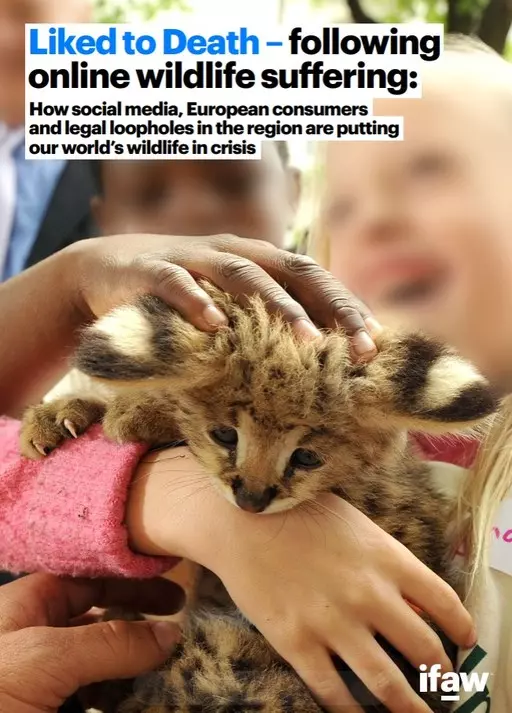
Our world’s wildlife is in crisis. Animals are facing unimaginable suffering, and many species are being driven to near extinction.
Habitat destruction for commercial gain and climate change are well-known culprits. But there is another, largely hidden cause of wild animal suffering — the exotic pet trade to which social media and European consumers are major contributors.
European demand and criminals drive this devastating industry which leads to millions of wild animals being snatched from their wild habitats every year; others are captive bred to fuel demand. If illegally sourced, the animals including mammals, birds, reptiles and amphibians are then smuggled into Europe, with many perishing due to the cruel and inhumane transport conditions.
And on arrival at their new homes none of these animals have guarantees of happy endings. Their distress continues as most owners simply cannot give them the lives and freedom they would have in the wild.
The trade is not only devastating for animals; it destabilises ecosystems and undermines the rule of law. Urgent action is required to close the legal loopholes that support it, reduce demand, and strengthen enforcement.
European citizens are ready for change. According to a 2025 independent market and behavioural research commissioned by IFAW on a representative sample, 84% of those surveyed feel European wildlife protection laws need strengthening.
This report uncovers the role of social media, public concern, and the vital steps decision makers and each of us should take to end the suffering of wild animals inherent to trading and keeping them as pets.
A Froglife perspective
Disease risk from captive animals
Written by Andrew Smart, Head of Science & Research
The risk of disease release into the UK from captive animals has been recognised for some time.
UK ranavirus infections are believed to have been a result of the release of captive American bullfrogs into garden environments (Cunningham 2018). Two widely-known fungal pathogens Batrachochytrium dendrobatidis (Bd) and B. salamandrivorans (Bsal) cause Chytrid infection in amphibians, the cause of global decline of many species. In the UK, Bd has been found in captive amphibians as well as in the wild and the wildlife trade has been implicated in its spread through discharge of zoospores into water supplies Fisher & Garner 2007.
Bsal has not been found in the wild in the UK yet, but has been reported from captive collections and occurs in the wild across Europe (Cunningham 2018) where it is responsible for a decline in fire salamanders (Schulz et al 2020). In 2012 the risk of widespread introduction of Bd through the trade in captive amphibians was identified as high (Peel et al 2012) and a study in 2014 confirmed the trade in captive amphibians was implicated in the spread of Bd (Wombwell 2014). As well as bacterial and virus infections, captive animals in Europe have been found to frequently carry endoparasites (Hallinger et al 2020) that could be a risk to native species.
Clinical diseases reported in pet store reptiles include parasites, cryptosporidium and protozoans (in lizards) and mites, viral infections and ectoparasites (in snakes) (Mader & Divers 2013). Reptiles are at risk from a number of emerging infectious diseases (diseases that have increased geographic range or incidence) including the skin infections: ‘yellow fungal disease’ and ‘snake fungal disease’ (Schilliger et al 2023). Snake fungal disease has been found in wild grass snakes in the UK (Allain & Leech 2024) and Europe (Franklinos et al 2017) but is distinct form the disease from the USA with infected animals less likely to be unhealthy (Allain et al 2024). Its not known if the UK strain is native or introduced but the risk exists of different strains emerging from a captive environment (Blanvillain et al 2024).
The diseases carried by captive animals are not just a risk to our native species of reptiles and amphibians but are also a risk to humans through zoonotic disease (Warwick et al undated and Green et al 2020).
For more information on disease risk from captive animals, please see International Fund for Animal Welfare’s campaign Liked to Death.